
3D Nonogram A voxel logic puzzle game for Android, in development at BetuWorks. Carve a hidden model out of a block of cubes.
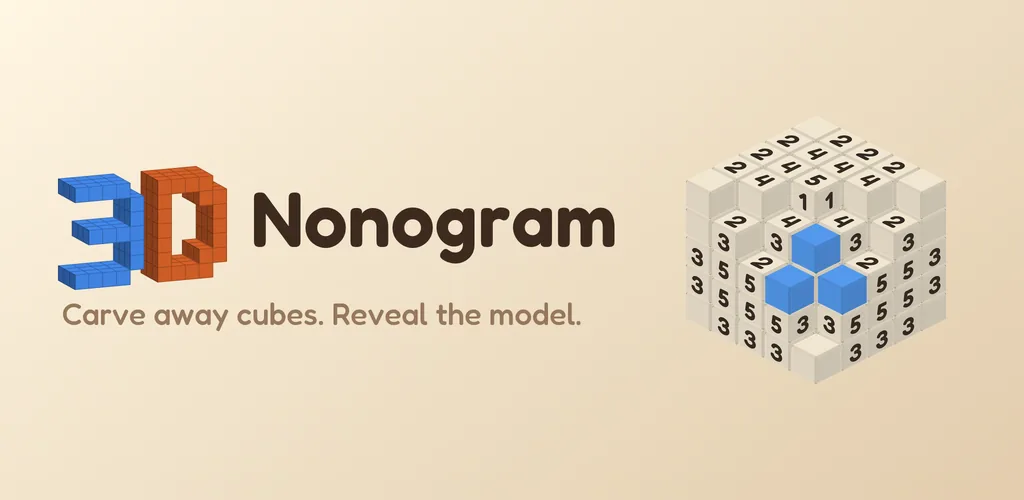
A solid block of cubes, with a shape hidden inside it. Every row running through the block is labelled with how many of its cubes belong to that shape. Work out which cubes are waste, chip them away, and the model underneath comes out: a teacup, a lighthouse, a cat.
3D Nonogram is a three-dimensional nonogram puzzle game in development at BetuWorks, in which you carve a hidden voxel model out of a block of cubes using number clues alone.
What a 3D nonogram is
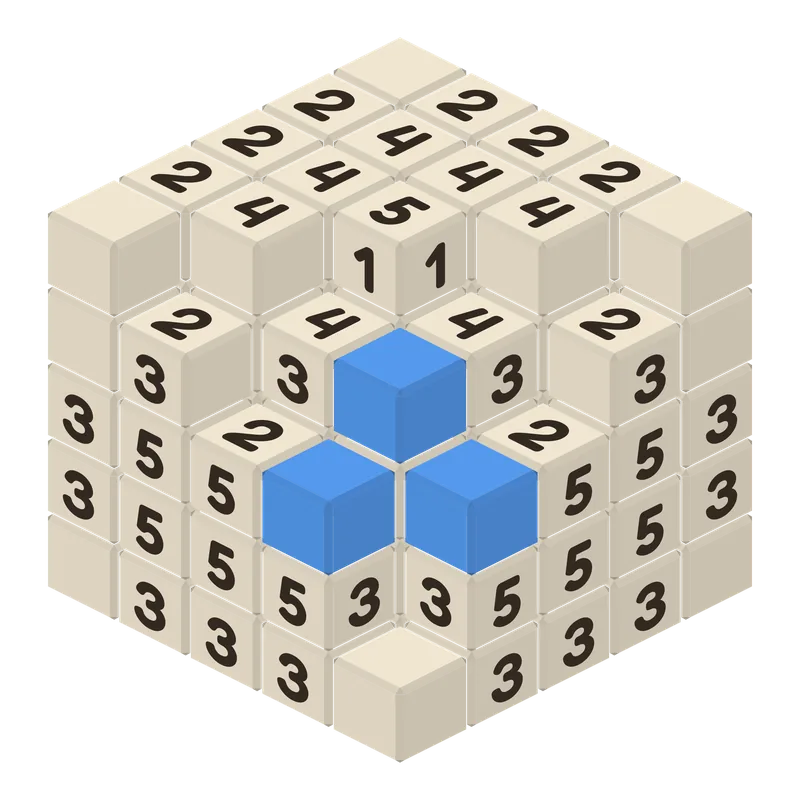
A flat nonogram, also called a griddler, hanjie or picture cross, gives you numbers along the edges of a grid and asks you to work out which squares are filled. This is the same idea with a third axis added, and one important difference: the clues are not only around the outside. Every line of cubes through the block carries its own number, on the faces at both ends, including lines that are buried in the middle.
The number tells you how many cubes on that line belong to the model. The marker around the number tells you how those cubes are grouped: a bare number means one unbroken run, a circle means exactly two runs, and a square means three or more. That grouping information is what makes the puzzle solvable in three dimensions instead of merely tedious.
If you have played Picross 3D, this will be familiar territory. If you have not, the closest comparison is stone carving with arithmetic: the sculpture is already in there, and the numbers tell you what to take away.
What comes out of the block
The models are hand-made rather than generated, and they are deliberately ordinary objects, things that read instantly at a glance of 20 cubes. The first pack is called Around the House.
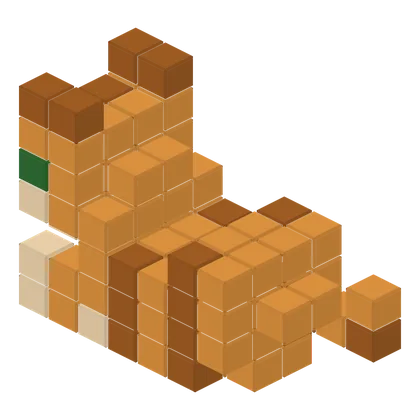
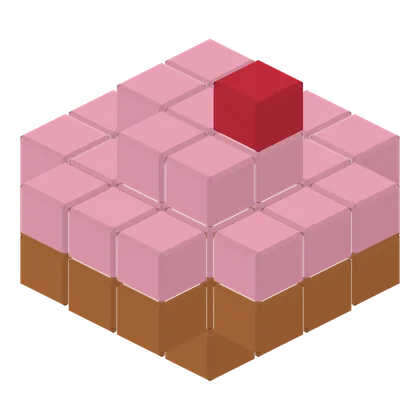
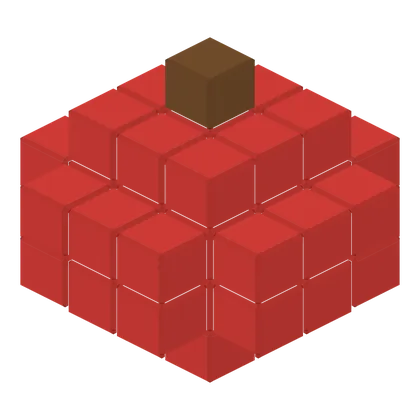
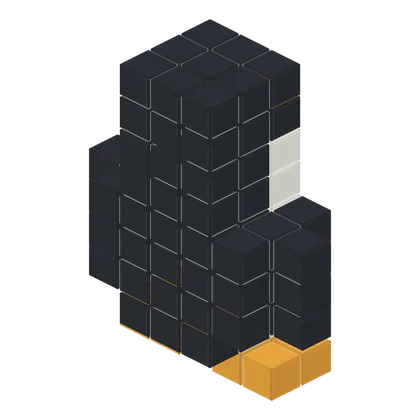
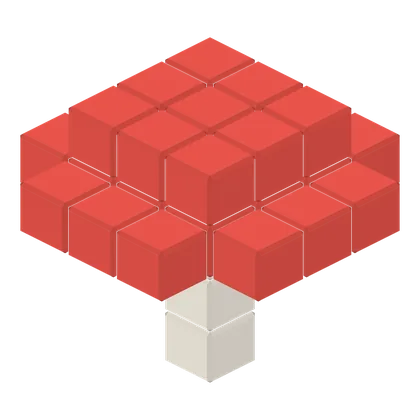
Boards are not restricted to cubes: most are oblong, running from a 5×3×1 slab in the tutorial up to a 10×10×10 tower. 36 levels are designed and ordered across two packs, with a further set of models authored and waiting for packs to be built around them.
No guessing, verified
Every puzzle is run through a line-logic solver before it is allowed to ship. The solver enumerates the valid fillings for each line and propagates the constraints the way a person would, to a fixpoint. If it finishes the board, the board needs no guessing and has exactly one solution.
The check runs headlessly over every model and fails the build on any puzzle that does not pass, along with several other gates: a level must not be finishable by counting alone, a model must not fall into detached pieces, and the reveal colour must not be confusable with the marker colour.
Reaching the middle
The obvious problem with a three-dimensional puzzle is that most of it is buried. The answer here is a peeling gesture: a strip along the edge of the screen slices layers off the block, and which face it peels depends on where the camera is looking. Turn the block and the cut re-aims to the side now facing you.
Cubes you have decided are part of the model can be painted, which protects them: a painted cube cannot then be broken by a stray tap. Breaking a cube that turns out to belong to the model costs a life and paints it for you, so a mistake still leaves you the information it bought.
Where it has got to
The systems are finished and the content gate passes. What is left is the part no amount of code review can substitute for: playing the opening levels on a real phone and finding out whether the difficulty ramp is right. After that come crash reporting and a soft launch in English with one free pack.
There is no release date, and this page will not invent one. The game is built without advertising, and the current build has no network permission at all.
- Godot 4.7 · GDScript
- Android first; iOS later
- 36 designed levels in two packs; more models authored
- From 5×3×1 up to 10×10×10
- Three-dimensional logic puzzle
- None. The build has no internet permission
- In development · no release date
Questions
What is a 3D nonogram?
A logic puzzle played on a solid block of cubes instead of a flat grid. A shape is hidden inside the block, and every line of cubes running through it on all three axes is labelled with how many of its cubes belong to that shape. You reason out which cubes are waste and remove them until the model is left standing.
What do the circle and square markers mean?
They describe how the cubes on that line are grouped. A plain number means one unbroken run. A circle means exactly two runs, so there is a gap somewhere. A square means three or more runs. The number is always the total count of model cubes on the line.
Is it released?
Not yet, and there is no date. The systems are built and the puzzles are written; device testing and a soft launch come next. Android first.
Will there be ads?
No. The game is being built without advertising, and the current build has no network permission, so it could not request one. The plan is free at launch with one puzzle pack.